
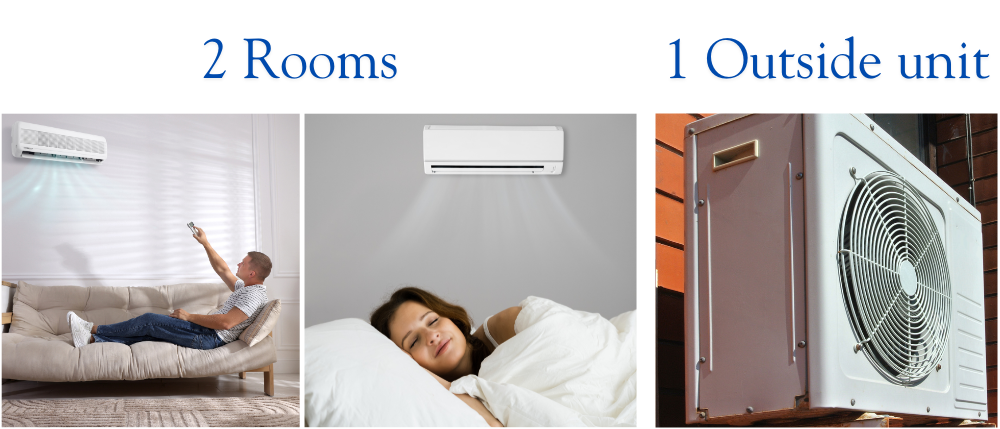
Split Air Conditioning Installation Systems: Feeding Multiple Rooms from One outside Compressor
Modern homes are changing rapidly, and so are expectations for indoor comfort. Hotter summers, better insulation standards, and the growing popularity of home working have encouraged many UK homeowners to consider permanent air conditioning. Instead of cooling just a single room, families increasingly want consistent temperatures throughout bedrooms, home offices, living spaces, and kitchens. This has led to growing interest in multi-split air conditioning systems, where several indoor units are connected to a single outdoor compressor. Rather than filling the outside of a property with multiple condensers, homeowners can achieve whole-house comfort using one carefully sized outdoor unit. Manufacturers including Bosch and Panasonic now offer residential systems capable of serving between two and five rooms from one outdoor unit, depending on capacity and design. At Mouton AC we have installed many of these systems in the Northampton Area.
A multi-split air conditioning installation operates using inverter technology that intelligently adjusts compressor speed according to demand. Each indoor unit contains its own thermostat and controller, allowing occupants to choose different temperatures in individual rooms. Imagine the children wanting cool bedrooms while someone works comfortably in a home office and another person relaxes in the lounge. Every room can maintain its own environment without requiring separate outdoor equipment. It is rather like having one highly efficient engine powering several carriages on a train, with each carriage maintaining its own level of comfort. This flexibility explains why multi-split systems have become one of the fastest-growing residential cooling solutions across the UK as summers continue to become warmer.
Understanding Multi-Split Air Conditioning Systems
How a Multi-Split System Works
A standard split air conditioner consists of one indoor unit connected to one outdoor condenser. A multi-split air conditioning system expands this concept by allowing several indoor evaporators to share a single outdoor compressor. Refrigerant travels through insulated pipework linking every indoor unit back to the outdoor condenser, where heat is either removed from the property during summer or brought inside during winter heating mode. Modern inverter compressors continuously vary their speed instead of repeatedly switching on and off, providing excellent efficiency and maintaining stable temperatures throughout the day.
Each indoor unit communicates independently with the outdoor compressor. If one bedroom requires cooling while another room is switched off, only the necessary capacity is delivered. This intelligent operation helps reduce unnecessary energy consumption while giving occupants individual comfort settings. Most manufacturers now produce wall-mounted units, ceiling cassettes, concealed ducted systems, and floor-mounted options that can all operate from the same outdoor condenser. The result is remarkable flexibility for both new-build properties and existing homes where appearance, available wall space, and room layout all differ. Some residential systems support up to five indoor units from one outdoor unit, while larger commercial systems can support considerably more.
Main Components of the System
Although multi-split installations appear complex, they are made up of familiar components working together seamlessly. The outdoor unit houses the inverter compressor, condenser coil, fan, expansion controls, and electronic management system. Indoors, each room receives its own fan coil unit complete with filters, heat exchanger, thermostat, and quiet fan motor.
Connecting everything together are insulated refrigerant pipes, condensate drains, electrical cables, and communication wiring. Professional installers carefully size these components according to manufacturer specifications to maintain efficiency and reliability. Every pipe length, bend, and elevation difference influences overall performance, making correct installation just as important as selecting quality equipment.
Why Homeowners Are Choosing Multi-Split Air Conditioning
Rising Demand Across the UK
Interest in residential air conditioning has risen sharply as UK summers become hotter and heatwaves occur more frequently. Homeowners are increasingly viewing air conditioning not as a luxury but as a year-round climate control solution because modern systems provide efficient heating as well as cooling. Industry reports show that installation enquiries continue to grow, driven by rising temperatures and improved energy-efficient inverter technology.
Another important factor is changing lifestyles. Remote working means spare bedrooms have become offices where productivity suffers if indoor temperatures exceed comfortable levels. Loft conversions, highly insulated extensions, and south-facing living spaces often trap heat well into the evening. Multi-split systems solve these challenges without requiring extensive structural alterations. Rather than relying on noisy portable air conditioners, homeowners gain permanent, quiet climate control with individual room settings and improved aesthetics.
Heating and Cooling from One System
Many people still associate air conditioning purely with cooling. Modern inverter systems actually function as air-to-air heat pumps, efficiently transferring heat into the building during colder months. This dual functionality allows homeowners to use the same equipment throughout the year.
Heat pump technology is exceptionally efficient because it moves heat rather than generating it directly through electrical resistance. For many rooms, especially home offices and extensions, this can provide economical heating while also delivering rapid cooling during summer. The ability to perform both roles improves the value of investing in a professionally installed multi-split system.
Benefits of Feeding Multiple Rooms from One Outdoor Unit
Space Saving Advantages
One of the biggest advantages of a multi-split air conditioning system is its ability to provide climate control to several rooms while requiring only a single outdoor condenser. For many homeowners, this is an important consideration because exterior wall space is often limited. Terraced houses, semi-detached properties, modern developments, and listed buildings may all have restrictions on where outdoor equipment can be installed. By using one outdoor unit instead of three or four separate condensers, the exterior of the property remains far more attractive and less cluttered.
This space-saving design also simplifies planning for extensions and renovations. Landscaped gardens, patios, driveways and outdoor entertaining areas remain largely unaffected because only one condenser requires positioning. The reduction in external equipment also means fewer mounting brackets, fewer electrical isolation switches and fewer wall penetrations for refrigerant pipework. From an aesthetic perspective, this creates a cleaner, more professional finish that many homeowners prefer.
Maintenance becomes simpler too. Service engineers have one outdoor system to inspect rather than multiple individual units scattered around the property. Annual servicing can therefore be completed more efficiently, helping maintain performance while keeping maintenance costs under control. When installed correctly, a multi-split system offers a neat, discreet solution without compromising comfort throughout the home.
Independent Temperature Control
Perhaps the greatest strength of a multi-split installation is its ability to provide completely independent climate control in every connected room. Each indoor unit has its own controller, thermostat and operating mode, allowing occupants to personalise temperatures according to their individual preferences.
Imagine a typical family home during summer. Parents may prefer their bedroom at 21°C for sleeping, children might like a slightly cooler environment, while someone working from home wants their office maintained at a comfortable 22°C throughout the day. At the same time, unused guest bedrooms can simply remain switched off. This zoning approach provides outstanding flexibility while avoiding unnecessary energy consumption.
Independent control also improves comfort throughout the changing seasons. South-facing rooms naturally become warmer than north-facing rooms due to solar gain. Rather than cooling the entire house to compensate for one overheated room, only the affected area requires additional cooling. Likewise, during winter, colder rooms can receive supplementary heating without overheating the rest of the property.
Many modern systems also include smartphone connectivity, allowing users to monitor and control individual rooms remotely. Whether arriving home from work or returning from holiday, homeowners can ensure every occupied room reaches the desired temperature before they even walk through the front door.
Lower Noise Levels
Noise is often one of the first concerns homeowners raise when considering air conditioning. Fortunately, modern inverter-driven multi-split systems are remarkably quiet. Indoor units frequently operate at sound levels below 20 dB(A) on their lowest fan settings—quieter than a whisper in many cases. This makes them suitable for bedrooms, nurseries, home offices and living rooms where low background noise is essential.
Using one outdoor compressor rather than several also reduces external sound levels. Instead of multiple condensers operating independently, a single inverter compressor adjusts its speed to match the combined cooling or heating demand. During periods of lower demand, compressor speed reduces automatically, leading to quieter operation and improved efficiency.
Professional installation plays a major role in achieving low noise levels. Correct positioning of the outdoor condenser, appropriate anti-vibration mounts and careful routing of refrigerant pipework all help minimise vibration transmission into the building. Experienced installers will also consider neighbouring properties to ensure outdoor equipment complies with manufacturer recommendations and local planning guidance.